The short version
- A blockage that returns to the same spot is the pipe, not what was in it.
- Lifting the chamber covers and noting which one stands full locates it before anyone arrives.
- Three usual causes: a cracked or open joint, a dropped section, or roots in a joint that already opened.
- Who pays depends on whose pipe it is, and a survey is what establishes that.
Every drain blocks eventually. Fat goes down a kitchen sink as a liquid and arrives in the pipe as a solid, wipes do not break down whatever the packet says, and a Victorian terrace in London has junctions in it that nobody has looked at since the house was built. A one off blocked drain is ordinary.
A blockage that comes back in the same place is a different thing. The debris is not choosing that spot at random. Something about the pipe at that point is slowing the flow down or catching what passes, and until that is dealt with, clearing it is a subscription rather than a repair.
Find out which chamber it is in
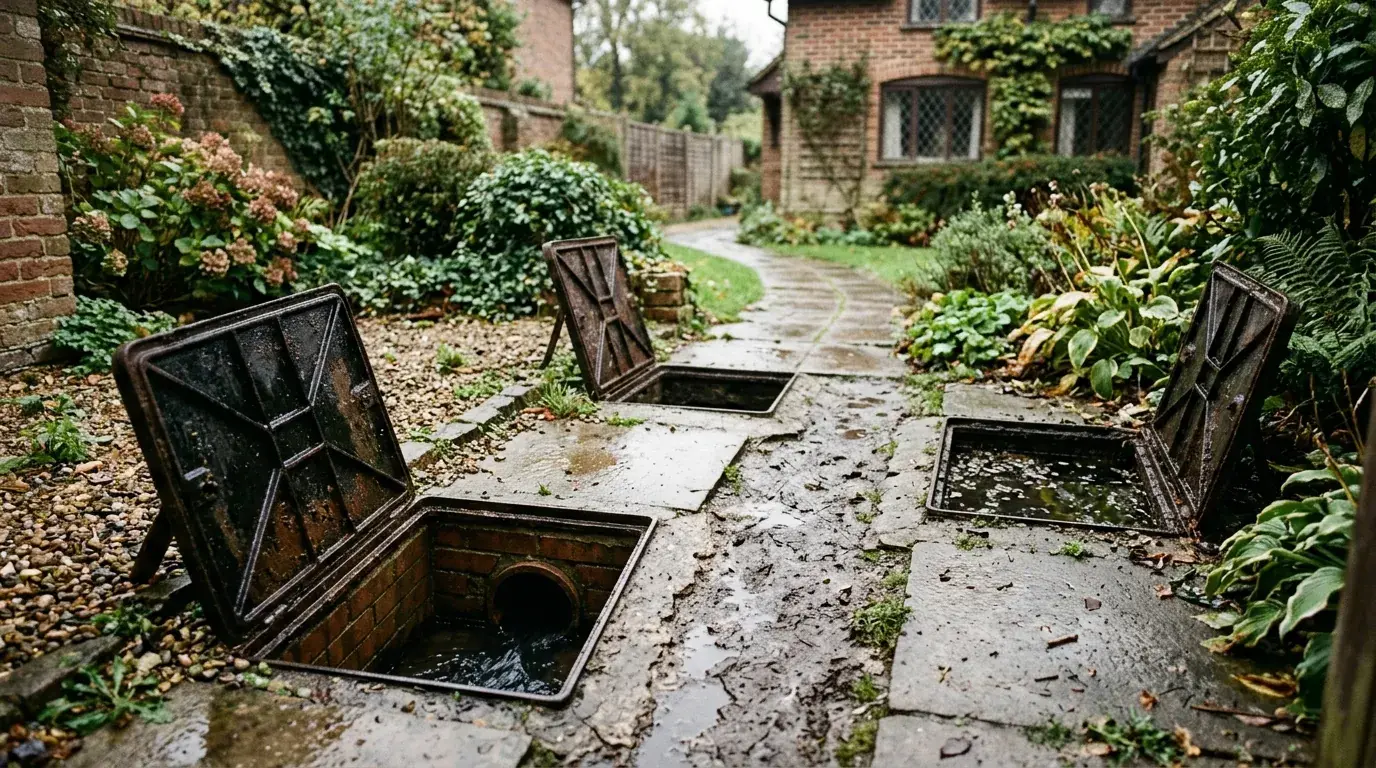
This is the part you can do before anybody is called, and it saves money because it tells the person who comes out where to start. Lift the inspection covers you can safely reach, working from nearest the house outwards, and look at the water level in each chamber.
A chamber running clear means everything upstream of it is flowing. A chamber standing full means the blockage is downstream of it. The boundary between the last clear one and the first full one is where the problem sits, and that is a length of pipe you can point at rather than a whole system.
If every chamber on the property is standing full, the blockage is past your boundary, in the lateral drain, and that is probably not your pipe to pay for. If the first one out of the house is full and the rest are clear, it is a short run between the house and that chamber, which is usually the cheapest version of this job.
The three things that make a drain block twice
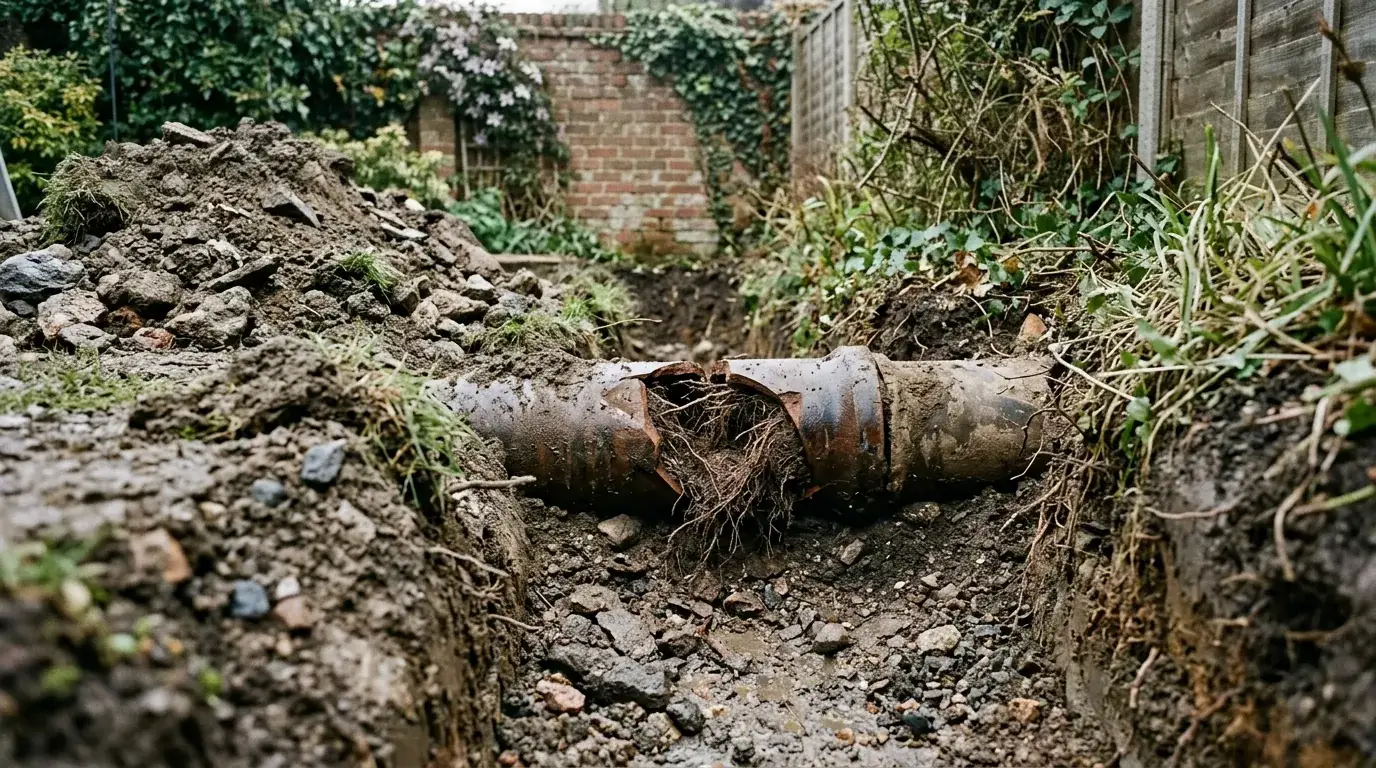
A cracked or open joint is the commonest. Clay pipe in short lengths with mortar joints was the standard for a century, and mortar does not last a century. Once a joint opens by a few millimetres, the step catches solids, and the blockage forms at that step every time.
A dropped section is the next. London clay shrinks in a dry summer and swells again in a wet winter, and the ground under a drain moves with it. Enough movement and a length of pipe loses its fall, or gains a dip. Water standing in a dip drops whatever it is carrying, which is why a blockage reappears at the same point.
Roots are third, and they follow the first two rather than causing them. A root cannot get into a sound pipe. It finds the moisture leaking out of a joint that has already opened, grows into the gap, and then keeps growing, because inside a drain there is water and nothing to stop it.
What a survey actually gives you
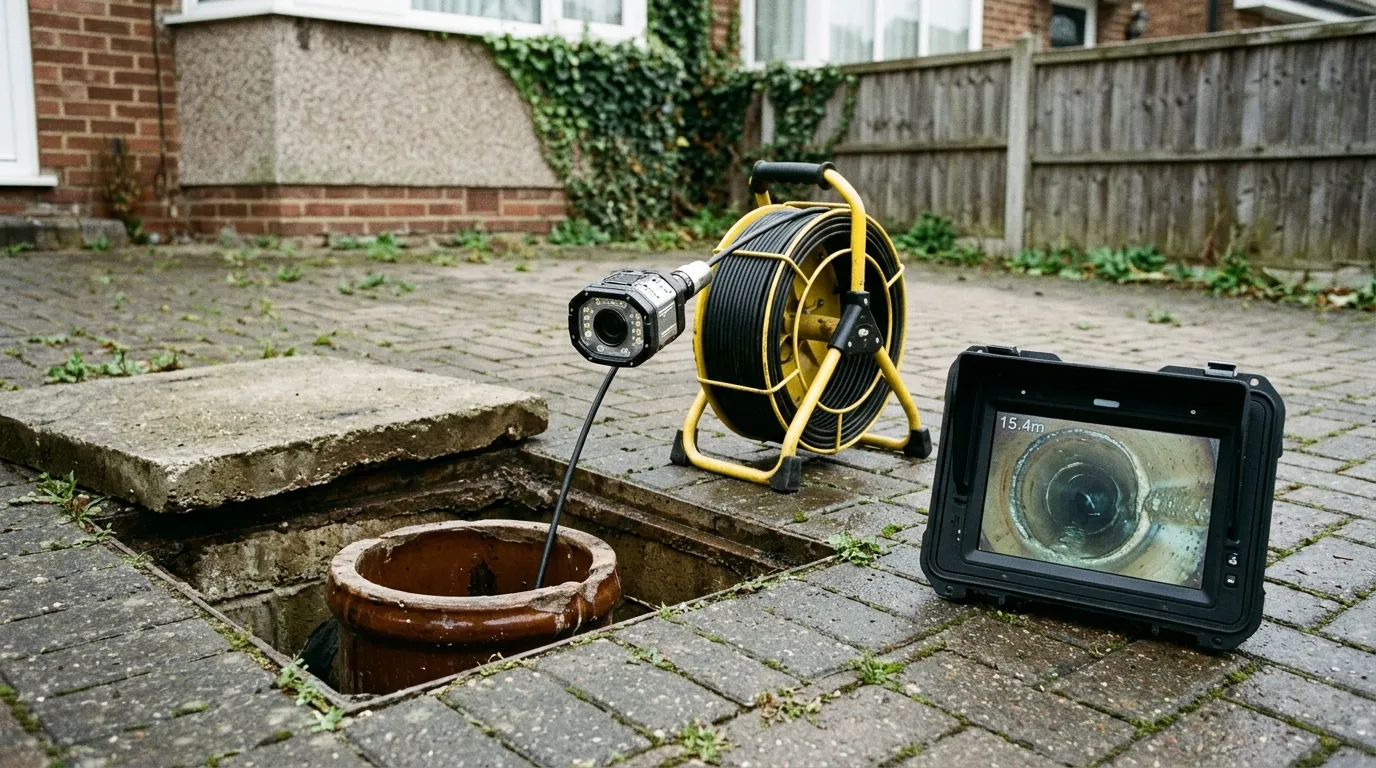
A drain survey camera goes in at the chamber nearest the problem and runs the length of the pipe, with a counter on the cable, so every defect comes back with a distance. That matters more than the picture: a cracked joint at eleven metres from the manhole is a thing that can be dug up or lined in one place, not a reason to replace the drain.
The survey also gives you the two answers everyone else is going to want. It says whether the defect is inside your boundary, which decides whether it is your pipe or the water company's. And it gives an insurer something to assess, which for a buildings policy with accidental damage cover is the difference between a claim and a conversation.
From there the repair is usually smaller than people expect. A single open joint can be patch lined through the chamber without digging. A longer length takes a full liner. Only a collapse, or a section with no fall left in it at all, needs excavating, and by then you know exactly where to dig.
Two blockages in the same place is the point to stop clearing and start looking. Send the postcode and say which chamber was standing full.
Frequently Asked Questions
- Twice in a year, in the same place, is the point at which clearing it again is the expensive option. A jetting visit costs less than a survey, so two or three of them feel like the cheaper route, but if the cause is a cracked joint or a dropped section then every one of those visits is money spent on a symptom. The survey tells you which it is in under an hour.
- Often, yes, and it is worth doing before anyone arrives. Lift the covers you can reach, starting nearest the house, and look at the water level in each one. The last chamber running clear and the next one standing full puts the blockage in the run between those two. Write down which covers you lifted and what you saw, because that is the single most useful thing you can hand over.
- Not always, and it changes who pays. Since 2011 most shared drains and the lateral run beyond your boundary transferred to the water company in England and Wales. A pipe serving only your property, inside your boundary, is yours. A survey that locates the defect also establishes which side of that line it sits on, which is the part an insurer or a water company will ask for.
- Usually not. Roots do not break a sound pipe open, they find a joint that has already opened and follow the moisture in. Cutting the roots out and lining that section stops the ingress without touching the tree, because the liner leaves no gap for them to get back into. Taking out a mature tree is a bigger job than relining the drain and often does not fix the original defect.